Multicultural weddings: organizing intercultural ceremonies in Gran Canaria
Love knows no borders, and more and more couples are bringing together different cultural roots, languages, and traditions in their wedding. A multicultural wedding is a celebration of diversity that unites people, rituals, and life paths. Gran Canaria in particular, as an international island, offers ideal conditions for intercultural ceremonies, with openness, hospitality, and professional guidance.
Especially for international couples, it is not only important that several languages are possible, but how they are used within the ceremony. Because a truly successful multilingual symbolic ceremony should not feel like a translation, but like a shared emotional space. This is exactly where my special strength at Inselboda lies: I conduct ceremonies in German, English, and Spanish and shape them so that both you as a couple and your guests feel included linguistically and emotionally.
In this article, you will learn how to plan a multilingual and culturally diverse wedding in Gran Canaria without it feeling “complicated” or artificial.
1. Language: making emotions understandable
The language of the ceremony is often the first thing couples think about. A multilingual ceremony can be both emotional and inclusive, as long as it is structured thoughtfully.
Options:
- Switching between two languages (e.g. Spanish and German or English and French)
- Supporting translations for the ceremony speech, vows, or rituals
- Using one “shared language” for everyone (e.g. English), with symbolic translations built into the flow
For many couples, this is exactly the crucial difference: it is not just about fitting several languages in somehow, but about creating a ceremony in which everyone can truly follow along. When parents, friends, or guests speak different languages, the concern quickly arises that part of the group may feel emotionally left out. With a thoughtfully designed German-English-Spanish wedding, or another harmonious language combination, the ceremony can feel connecting rather than dividing.
I personally conduct ceremonies in German, English, and Spanish and develop a personal multilingual speech with you that sounds natural and truly carries your story. If additional language support makes sense, we can explore together what fits your setting best.
2. Bringing rituals from both cultures together
An intercultural ceremony thrives when both sides can see themselves reflected in it, for example through:
- traditional music or clothing
- wedding symbols from different religions or philosophies
- rituals such as the sand ceremony, tea rituals, blessings, or family elements
Important: this should not be a “mandatory program,” but a genuine agreement and appreciation from both sides. I help you find suitable rituals or create new ones.
3. Wedding dinner and music with a global touch
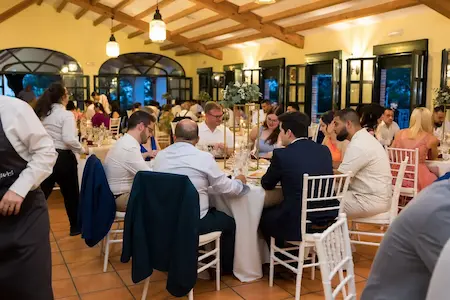
The celebration after the ceremony can also have an intercultural character:
- a mix of two cuisines or buffets with one country focus each
- multilingual menus or menu cards with symbols
- music from both countries of origin, or international live bands/DJs
- dancing, games, and customs from different family cultures
Gran Canaria offers many caterers and musicians with experience in culturally diverse weddings.
4. Being considerate of different expectations
At intercultural weddings, different ideas of what a wedding should look like often come together: one family celebrates on a grand scale, the other prefers something intimate; one expects a religious ceremony, the other a symbolic one.
Tip:
Open communication with everyone involved, and structured, neutral planning, help avoid conflict. As a wedding planner, I am happy to be your mediating voice between worlds.
5. Symbolism & sensitivity
Especially at international weddings, it is important that no one feels excluded or overlooked. This includes:
- sensitive language in invitations, speeches, and decor
- space for “explanation” (e.g. ritual outlines in printed programs)
- consideration of religious or cultural taboos (e.g. regarding food, clothing, or symbols)
I would be happy to support you in implementing your wedding with cultural sensitivity and to ensure that diversity becomes a strength.
Multilingualism as the heart of your ceremony
A multilingual wedding works especially well when language is understood not only as information, but as part of the atmosphere. Some sentences can quite deliberately be spoken in a mother tongue, others in the language that connects you as a couple. This creates a ceremony that does not feel technical, but alive, close, and real.
For many couples, that is exactly the big wish: that international guests are not only present, but can truly experience the moment. As a multilingual ceremony officiant, I accompany you in German, English, and Spanish and make sure that content, transitions, and emotions remain understandable and harmonious for everyone. This turns an international wedding into more than just an organizational solution; it becomes a connecting experience for everyone involved.
A wedding that brings everyone together
A multicultural wedding is more than a celebration; it is a sign of openness, tolerance, and a shared future. With professional guidance, the balance between heritage, heart, and new paths can be achieved.
If you are looking for a multilingual symbolic ceremony in which German, English, and Spanish do not feel like an add-on, but like a natural part of your story, I will accompany you with exactly that sensitivity. My work at Inselboda combines linguistic confidence with personal warmth, so that your ceremony not only looks beautiful, but also feels truly right for you and your guests.
Frequently asked questions (FAQ) about multicultural weddings in Gran Canaria
Can our symbolic ceremony take place in German, English, and Spanish?
Yes, that is absolutely possible. A symbolic ceremony can be structured so that all three languages are integrated naturally and harmoniously. What matters is not only the translation, but a flow that remains emotionally understandable for you and your guests.
What is the benefit of a multilingual ceremony officiant at international weddings?
The big advantage is that language does not have to be conveyed indirectly first. When the ceremony is led directly in multiple languages, international guests usually feel much more included. At the same time, the flow feels more natural because language, emotion, and transitions are conceived as one whole.
Is a multilingual ceremony in Gran Canaria possible?
Yes, I work with officiants who lead ceremonies in multiple languages, or I support you in combining translation and symbolic language.
How can rituals from two cultures be combined?
Together we develop a ceremony flow that integrates both cultural elements, for example through music, symbols, wedding rituals, clothing, or language.
Are there caterers in Gran Canaria who offer cultural specialties?
Yes, many service providers have international experience and are open to culinary requests, or they work together with specialist providers.
How do I avoid cultural misunderstandings at my wedding?
Through open communication, respectful planning, and if needed moderation by the planner. I pay attention to details that encourage cultural sensitivity.
Is an intercultural wedding also possible on a smaller scale?
Yes — especially elopements or micro weddings offer a great deal of freedom to incorporate cultural elements in a harmonious way. I design them individually together with you.